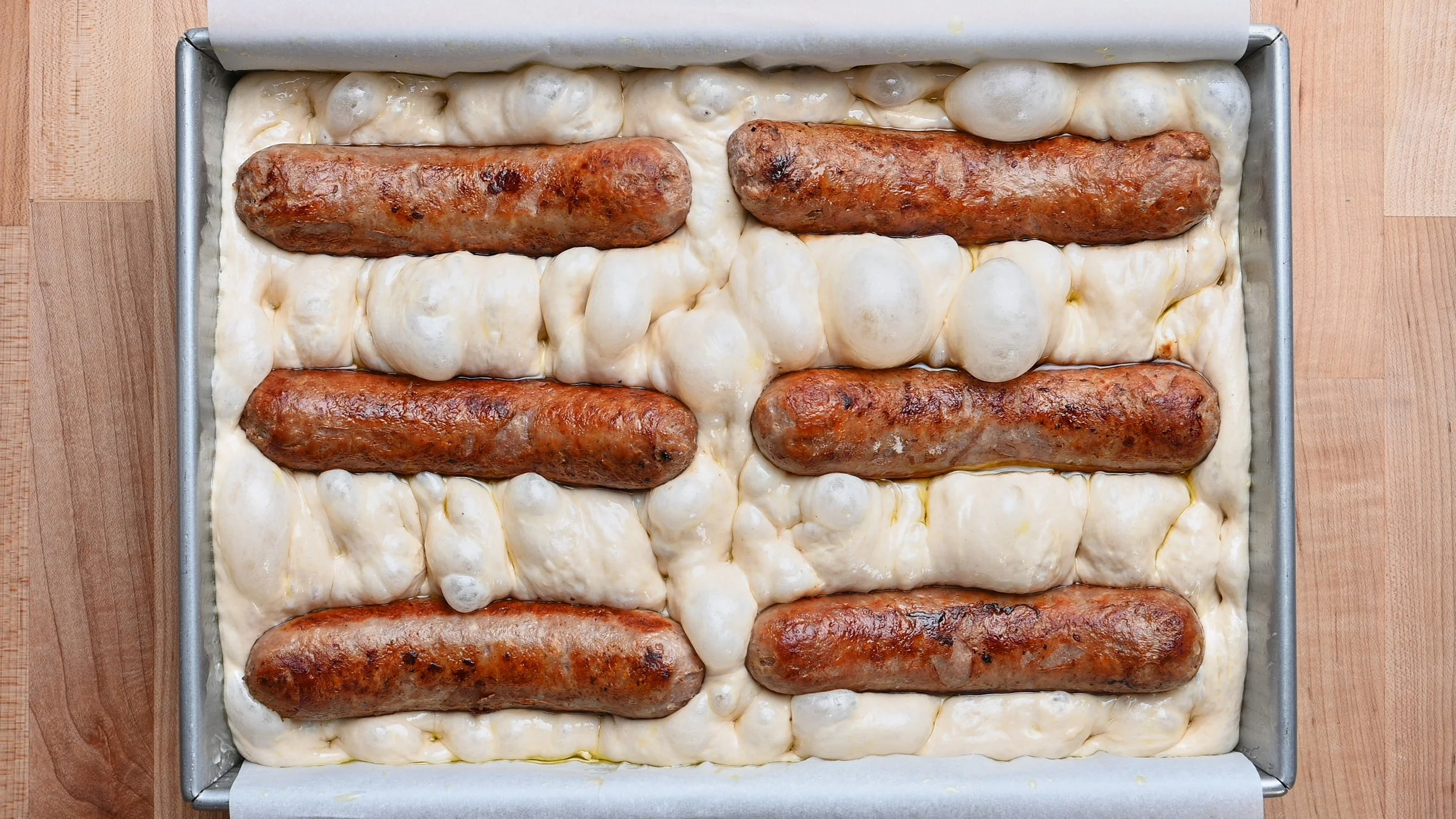
Bratoberfest Focaccia
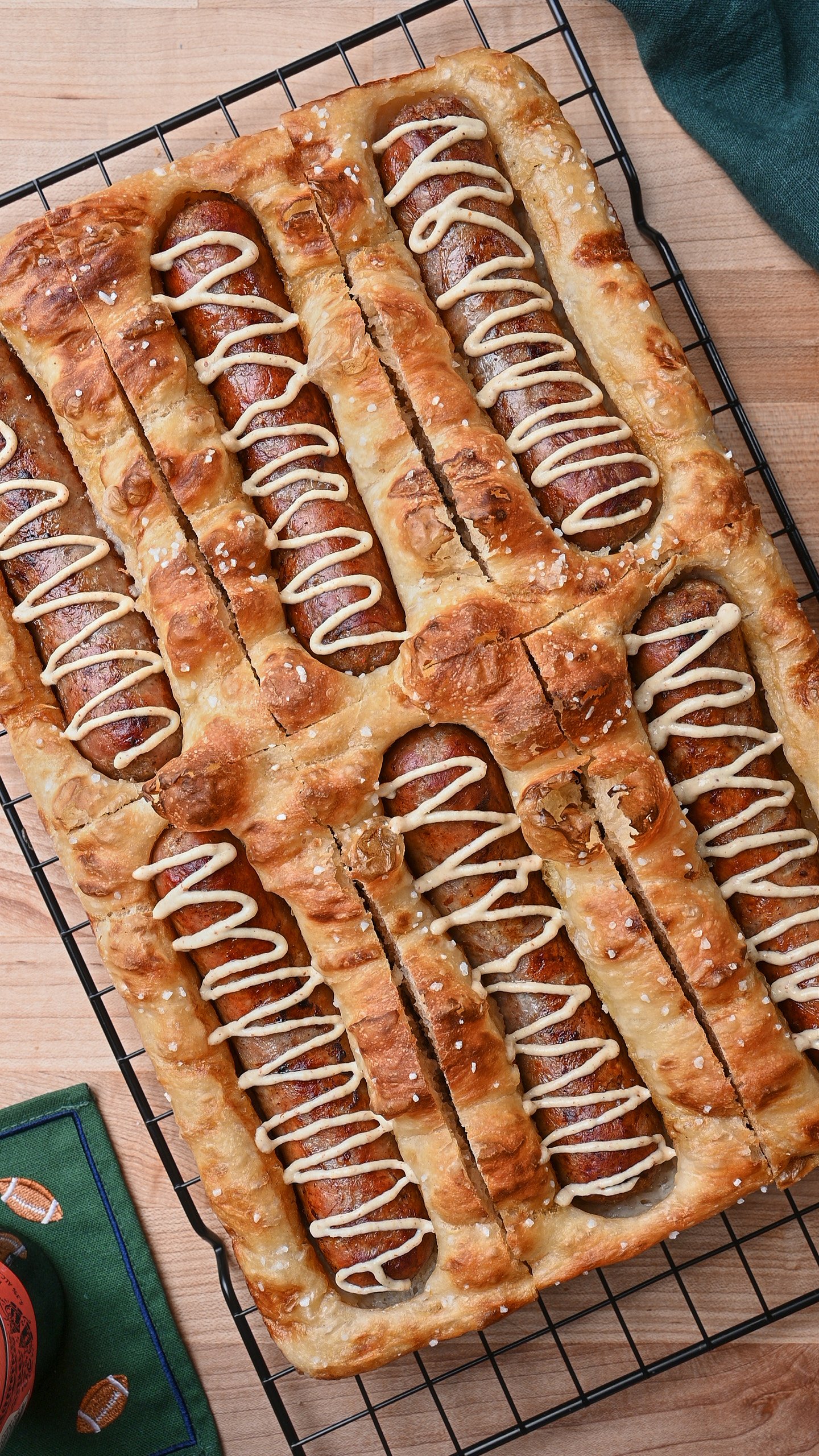
Makes one 9 × 13-inch focaccia; serves 6This was inspired by a hot dog focaccia recipe I came across about a year ago. It takes the same idea and gives it an Oktoberfest spin with bratwurst, lager in the dough, and a salty, pretzel-like finish.
Focaccia is one of my all-time favorite breads, both to eat and to make. This dough is about 90% hydration, giving it a light, airy interior with a crisp top and bottom. Instead of kneading, you build its strength with one set of stretch-and-folds followed by two gentle coil folds. It takes a little patience, but most of the time is hands-off.
The bratwursts are simmered in beer, browned, cooled, and pressed into the dough. I worried they might weigh everything down, but the dough stays airy and puffs beautifully around them. An optional baking-soda wash and pretzel salt add a golden, pretzel-like finish.
Serve it with German mustard, sauerkraut, caramelized onions, fresh onions, or your favorite brat toppings. It’s the brat and bun baked together in one pan: easy to slice, perfect for sharing, and great for freezing and reheating.
WHAT YOU’LL NEED
-
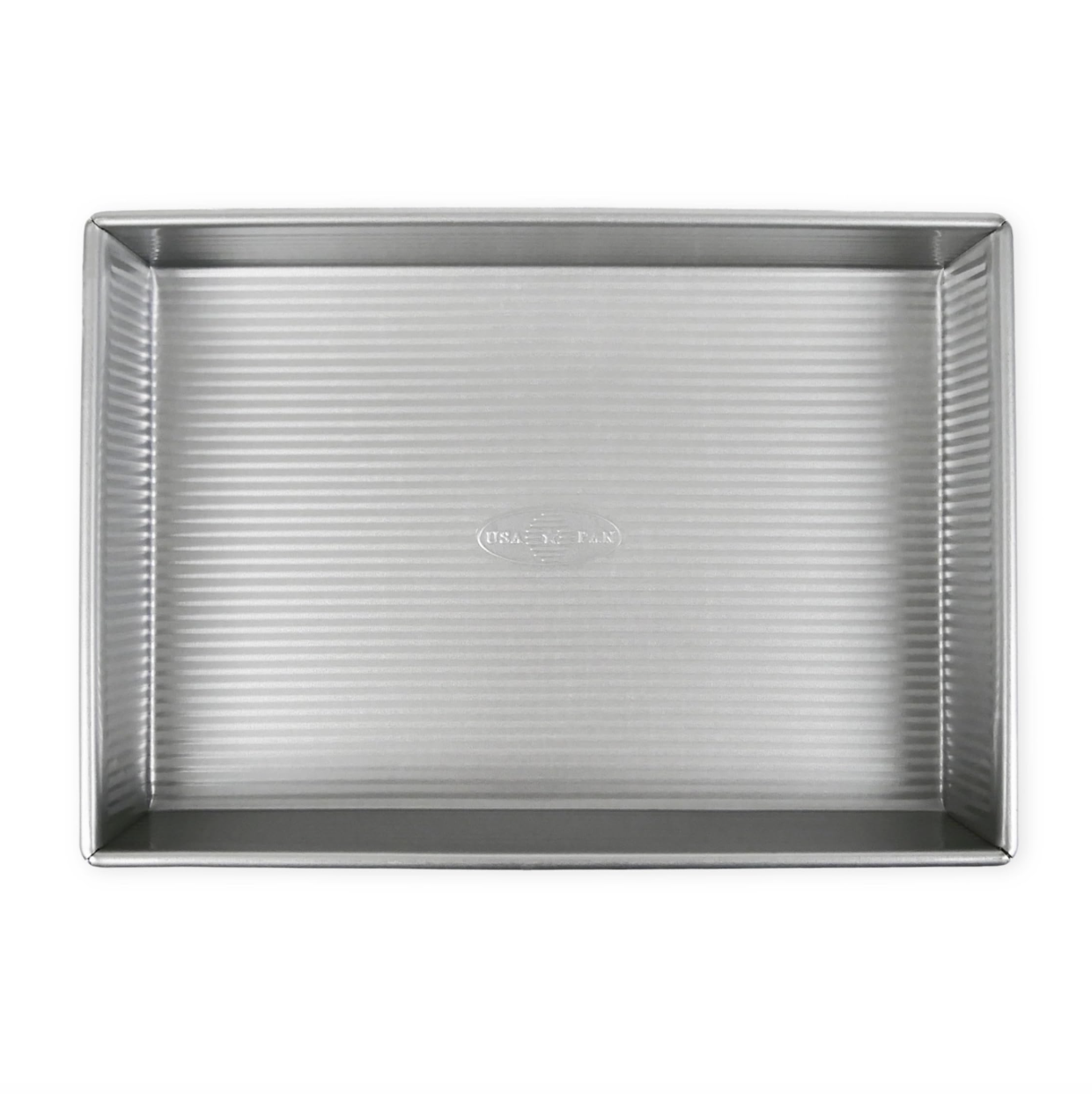
![9x13 metal cake pan metal 9x13 pan]()
9x13 Metal Pan
-
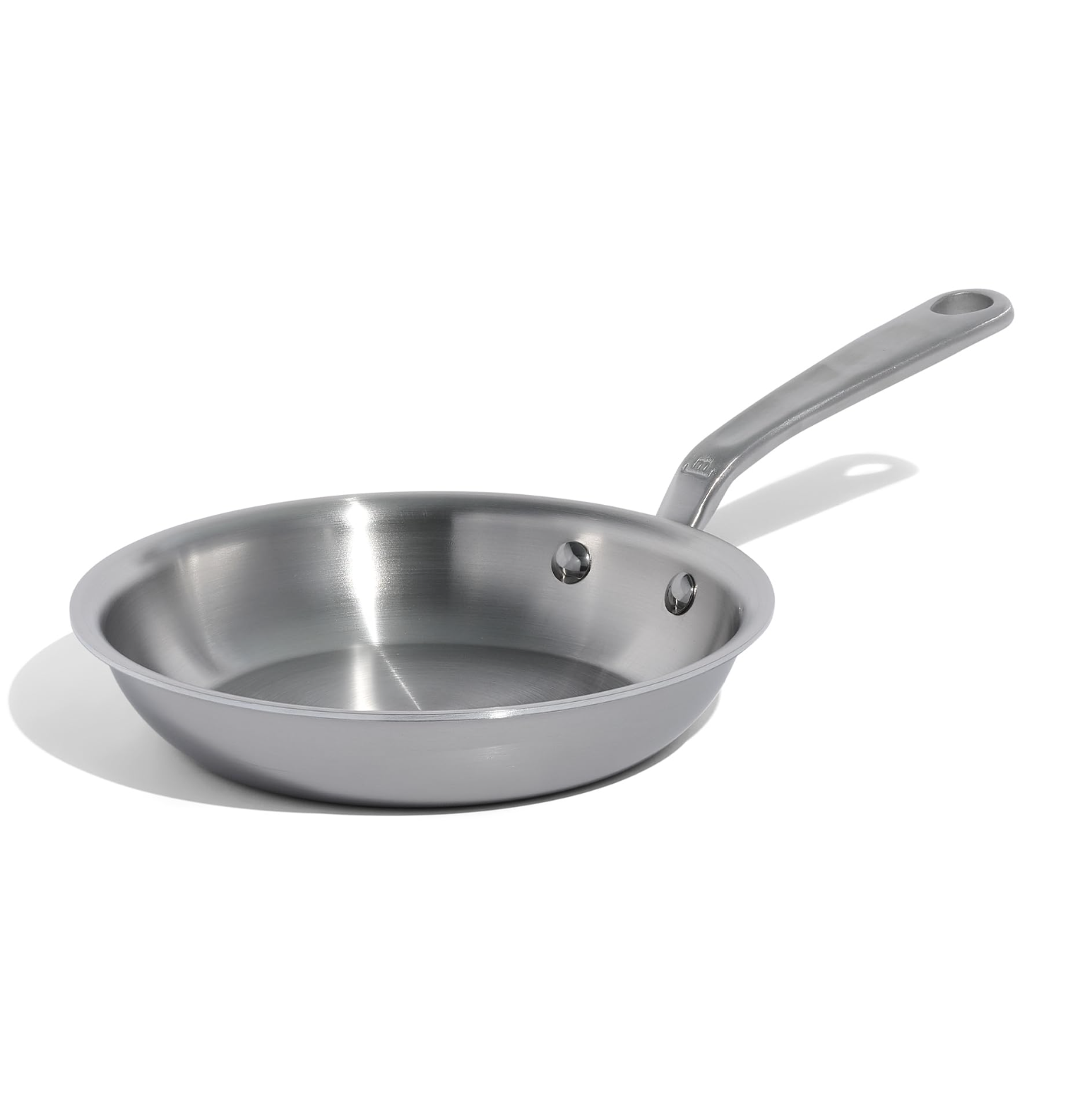
![Stainless Steel Skillet Stainless Steel Saute Pan Best Skillets Made In Skillet 8 inch stainless skillet best amazon cookware]()
Large Lidded Skillet
-
![Oxo good grips everyday spatula on amazon best silicone spatula best rubber spatula for cooking]()
Spatula
-
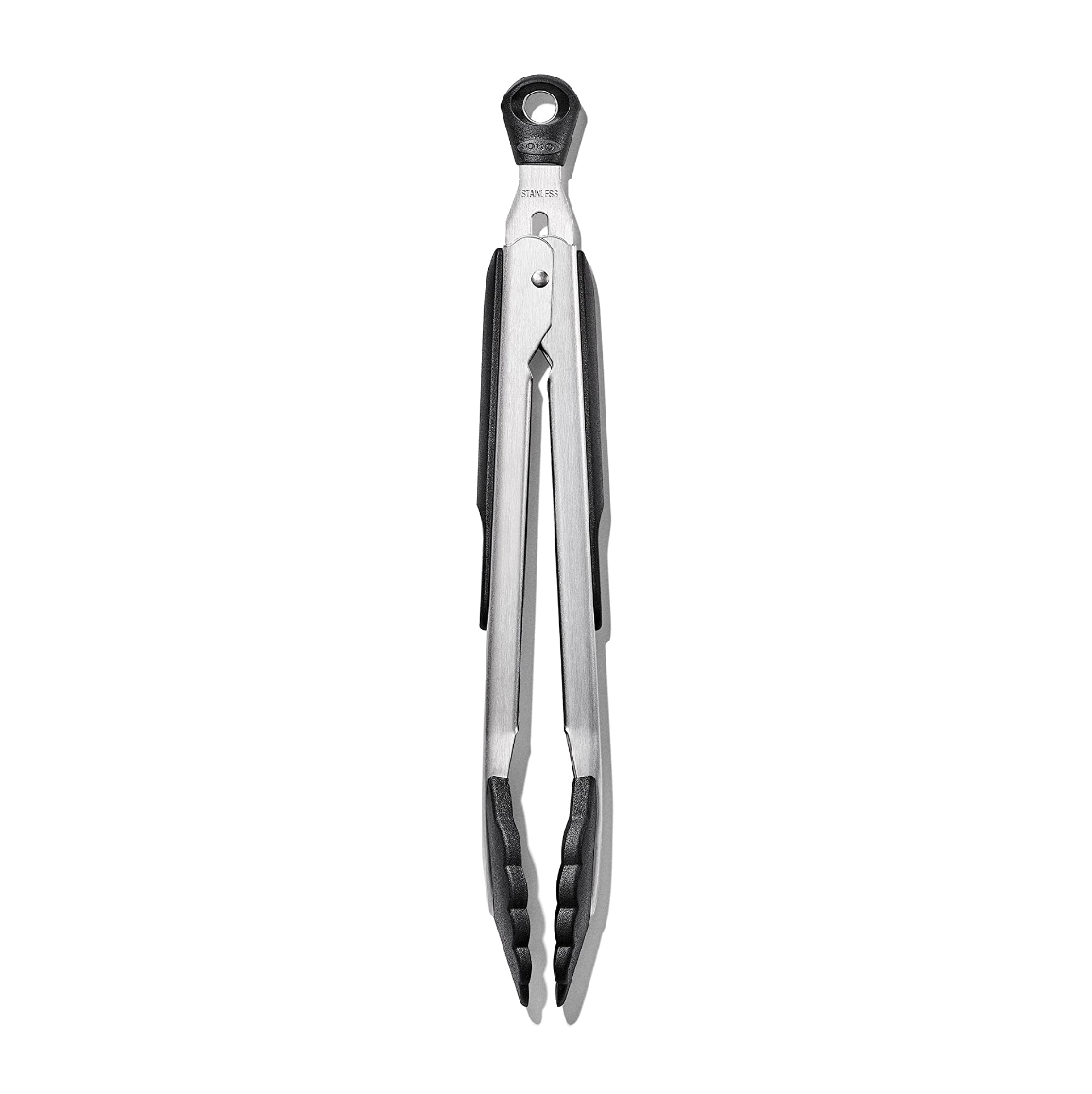
![Tongs from Amazon cooking tongs best tongs for kitchen stainless steel tongs]()
Tongs
-
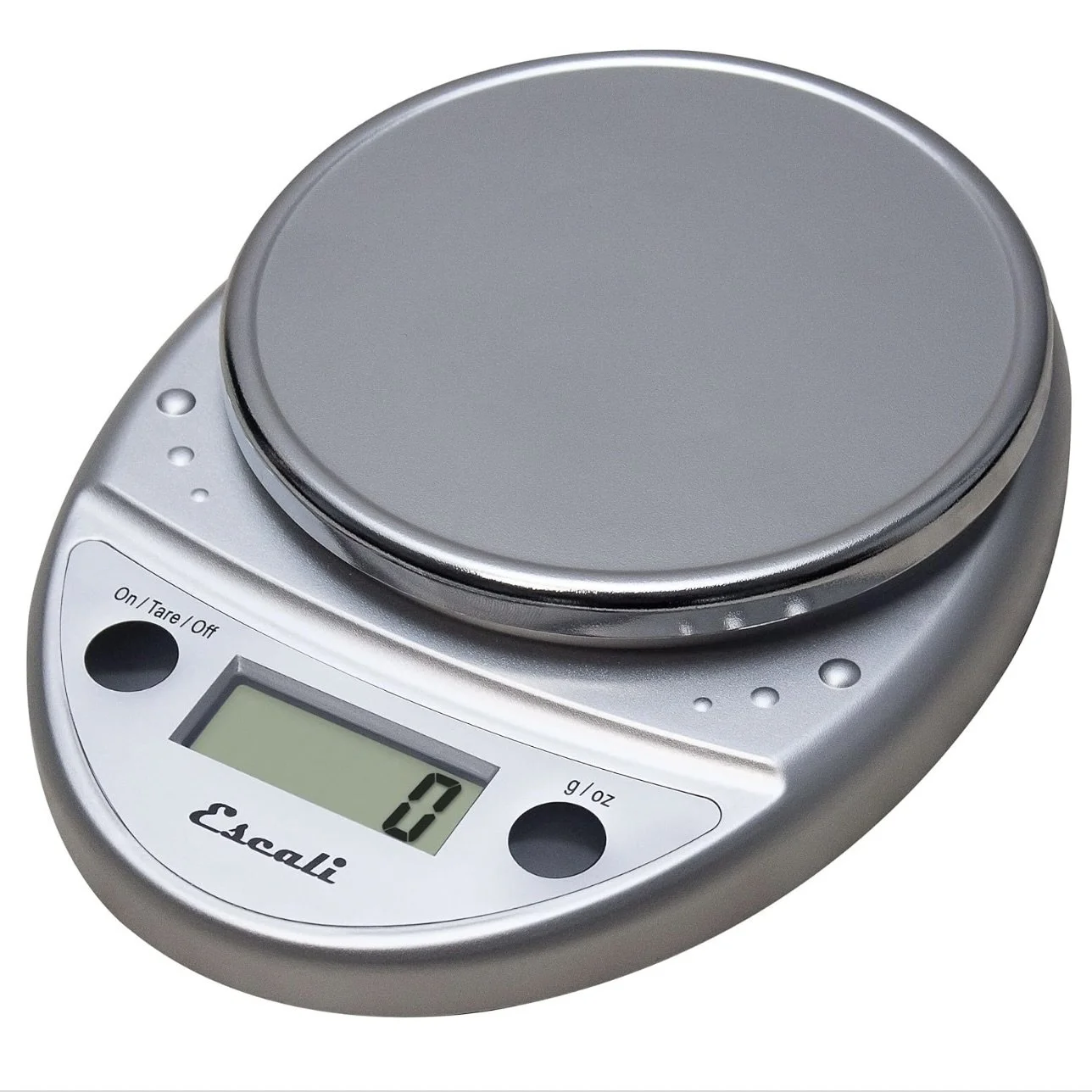
![Escali Digital Food Scale in Chrome Color on Amazon]()
Digital Kitchen Scale

INGREDIENTS
Beer Focaccia Dough
4 cups bread flour, spooned and leveled (500 g)
1 tbsp + 1 tsp Diamond Crystal kosher salt, or 2 ¼ tsp Morton kosher salt (11 g)
1 ½ tsp granulated sugar (6 g)
1 ¾ tsp instant yeast (6 g)
1 ¼ cups lukewarm water (300 g), 90–100°F
⅔ cup room-temperature lager, such as Märzen, Festbier, or Vienna lager (160 g)
1 tbsp + 1 tsp extra-virgin olive oil (18 g)
Bratwursts
6 pork bratwursts, raw
¾ cup lager
Up to ¼ cup water, only if needed
Pan & Pretzel Finish
3 tbsp extra-virgin olive oil, divided:
2 tbsp for the pan
1 tbsp for the top
1 tsp baking soda
¼ cup hot water
Pretzel salt, for topping
For Serving
Whole-grain or German mustard
Well-drained sauerkraut, optional
DIRECTIONS
Make the Focaccia Dough
In a large bowl, whisk together the bread flour, kosher salt, sugar, and instant yeast.
Add the lukewarm water, room-temperature lager, and olive oil. Mix with a sturdy spatula or flexible dough scraper until no dry flour remains. The dough will be extremely wet, sticky, and somewhat shaggy.
Cover and rest for 20 minutes.
Dip one hand in water to prevent sticking. Slide your damp hand underneath one side of the dough, gently stretch it upward until you feel resistance, and fold it over the center. Do not pull far enough to tear the dough.
Rotate the bowl a quarter turn and repeat. Continue until all four sides have been folded into the center. These four folds equal one complete stretch-and-fold set.
Cover, set a timer for 30 minutes, and begin cooking the bratwursts.
Cook the Bratwursts During the Folding Rest
Place the bratwursts in a large skillet that has a lid. Add the lager until it comes about halfway up the sides of the bratwursts (add water if needed).
Cover and bring to a gentle simmer over medium heat. Reduce the heat to medium-low as needed to prevent an aggressive boil.
Simmer for 10 minutes. Turn the bratwursts, cover again, and cook for about 5 minutes more, or until the centers reach 160°F.
Transfer the bratwursts to a plate and carefully pour off the remaining liquid. Return the skillet to medium heat.
Brown the bratwursts for about 1–2 minutes per side.
Then transfer to a clean plate. Cool completely, then pat thoroughly dry.
Perform the Coil Folds & Bulk Rise
When the 30-minute dough timer rings, wet both hands and slide them underneath the center of the dough from opposite sides.
Slowly lift the center straight upward. Allow the two ends hanging toward and away from you to stretch and release from the bowl. Lower the dough gently so both ends curl and tuck underneath.
Rotate the bowl a quarter turn and repeat once. These two lifts equal one complete coil-fold set.
Cover and rest for 30 minutes.
Perform a second coil-fold set in the same way: lift from the center, lower so the two ends tuck underneath, rotate the bowl a quarter turn, and repeat once.
Cover and let the dough rise until approximately 60–75% larger, usually 30–60 minutes. Follow the dough rather than the clock. It is ready when it looks aerated and slightly domed, has bubbles around the edges, and jiggles noticeably when the bowl moves. It does not need to double.
Prepare the Pan & Complete Pan Proof
Line the bottom and two long sides of a metal 9 × 13-inch pan at least 2 inches deep with a parchment sling. Leave enough overhang to lift out the baked focaccia.
Pour 2 tbsp olive oil over the parchment. Spread it across the bottom and coat the exposed sides of the pan.
Gently transfer the risen dough into the prepared pan without punching it down.
With well-oiled hands, fold one short end approximately one-third of the way over the center. Fold the opposite short end over the first fold, like folding a letter.
Carefully flip the folded dough over so the seam is underneath and the smooth side faces up. Keep the dough centered lengthwise in the pan.
Cover and rest for 20 minutes, then slide oiled fingertips underneath the edges and gently ease the dough toward the corners. Avoid pressing down or flattening the surface.
Cover and let the dough rise for 45–60 minutes, until marshmallowy, bubbly around the edges, and noticeably jiggly.
During this proof, preheat the oven to 425°F with a rack in the lower third.
Finish the Focaccia & Bake
Dissolve the baking soda in the hot water and let the solution cool slightly.
Gently brush a thin film over the exposed dough. Do not leave puddles or use all the solution. Let the wash absorb for 1–2 minutes, then drizzle with the remaining 1 tbsp olive oil.
Arrange the six cooled, dry bratwursts in two, evenly spaced rows of three and press firmly into the dough.
With oiled fingertips, dimple the dough around and between the bratwursts.
Optionally sprinkle lightly with pretzel salt or another coarse salt.
Bake immediately at 425°F on the lower-third rack for 25–30 minutes. It’s ready ready when the top is deeply golden and a thermometer inserted into a bread-only section registers 205–210°F.
Cool in the pan for 5 minutes, then lift out using the parchment sling and transfer to a wire rack.
Cool uncovered for 20–30 minutes before cutting and serving.
RECIPE NOTES & TIPS
Store completely cooled pieces in an airtight container in the refrigerator for up to 3–4 days. To freeze, wrap fully cooled individual pieces tightly and place them in a freezer-safe bag or container.
Reheat refrigerated pieces uncovered in a 375°F oven until hot and crisp, usually 8–12 minutes. Frozen pieces generally need 15–20 minutes.
To make a traditional focaccia without beer, replace the ⅔ cup lager with an equal amount of water (160 g), giving you 460 g total water. Keep the remaining dough ingredients, folding schedule, and proofing method unchanged.
For a plain traditional focaccia, omit the bratwursts and baking-soda wash. After the final proof, drizzle the dough with olive oil, dimple it, and finish with flaky salt, rosemary, or your favorite focaccia toppings. Bake as directed.
Using bread flour is important at this hydration. Lower-protein all-purpose flour may create a dough that spreads excessively and cannot support the bratwursts.
To be precise and consistent when baking, I recommend using a Digital Food Scale. The one I linked is relatively inexpensive and in my opinion, a great investment for any home kitchen! But if you don’t have one, I’ll always include cup measurements as well.