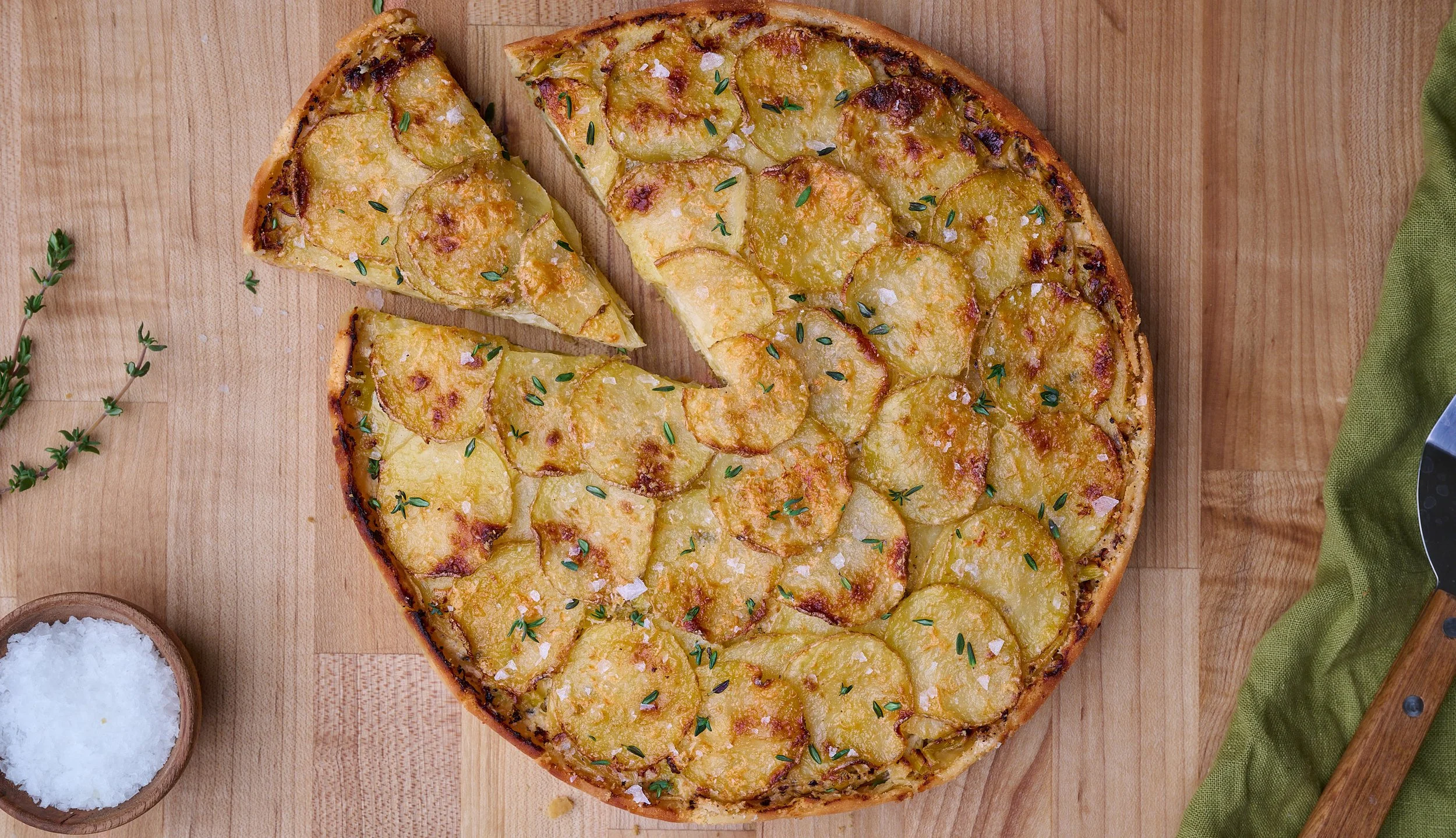
Potato & Leek Gratin Tart
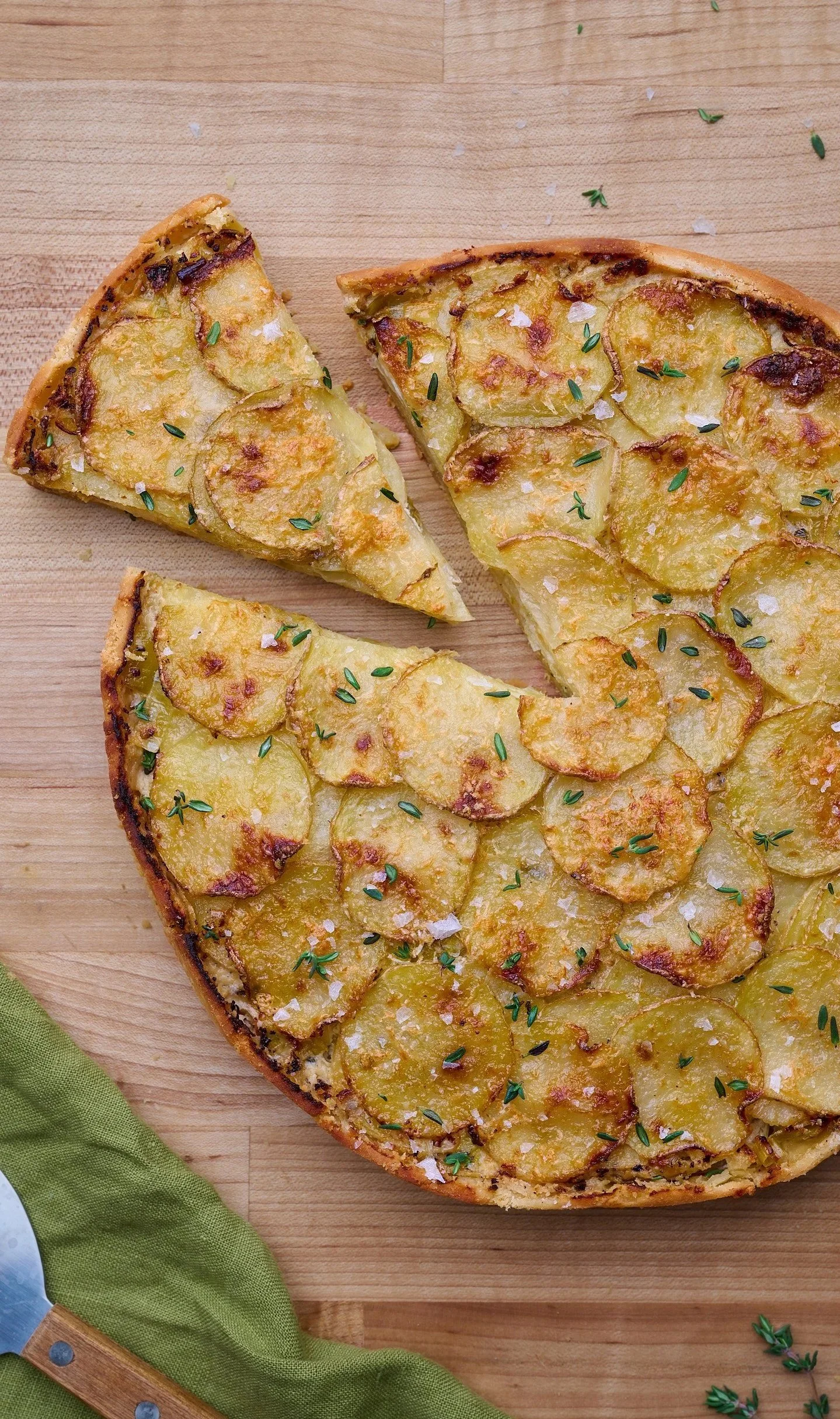
Makes one 9- or 10-inch tart (10–12 servings)This tart is going to be my new go-to for company. It’s great with a side salad for lunch or brunch, or as a side dish at dinner that’ll steal all the attention. It’s also just as good at room temperature as it is warm, which gives you so much flexibility if you’re making it for an event or holiday gathering.
The filling is surprisingly low effort, but it tastes incredibly refined and impressive. It’s a mix of sautéed leeks, thinly sliced potatoes, crème fraîche, thyme, Dijon, and a touch of nutmeg — a classic flavor combination that bakes up into a lighter take on scalloped potatoes, all tucked inside a crispy tart crust.
“Gratin” in French refers to a baked dish with a crispy top, usually from breadcrumbs or cheese. Here, it’s cheese. Tossing a few thinly sliced potatoes in melted butter and Parmesan before arranging them in a concentric circle. The Parmesan helps the potatoes crisp up in the oven, creating a beautiful contrast with the soft, creamy layers underneath.
Note: This recipe was tested in a 9-inch tart pan, but the quantities will also comfortably fill a 10-inch tart pan or tart ring. The tart will simply be slightly wider.
WHAT YOU’LL NEED
-
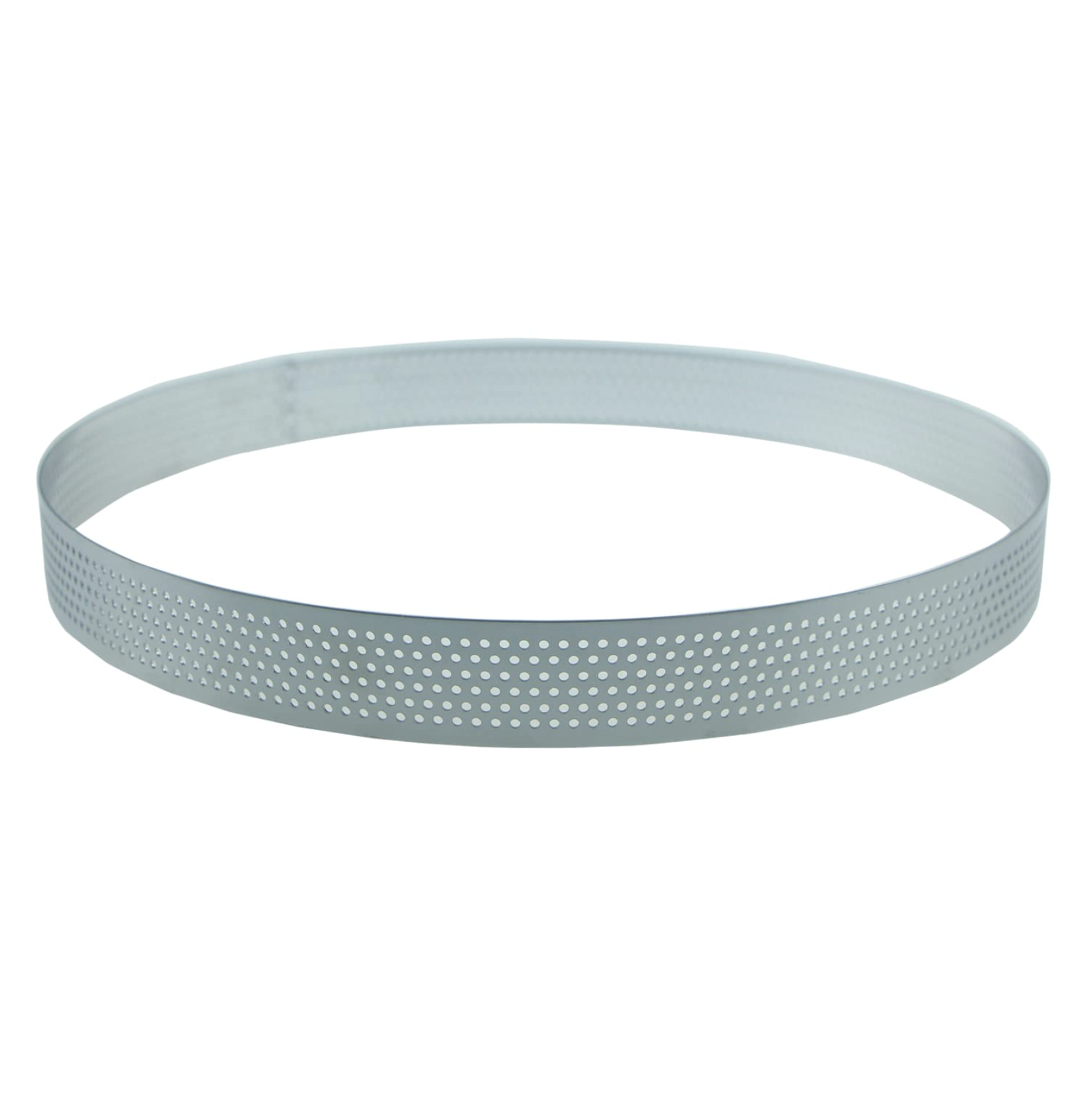
![9 inch tart pan tart ring perforated tart ring baking tart rings tart pans nice inches]()
9" or 10" Tart Pan or Ring
-
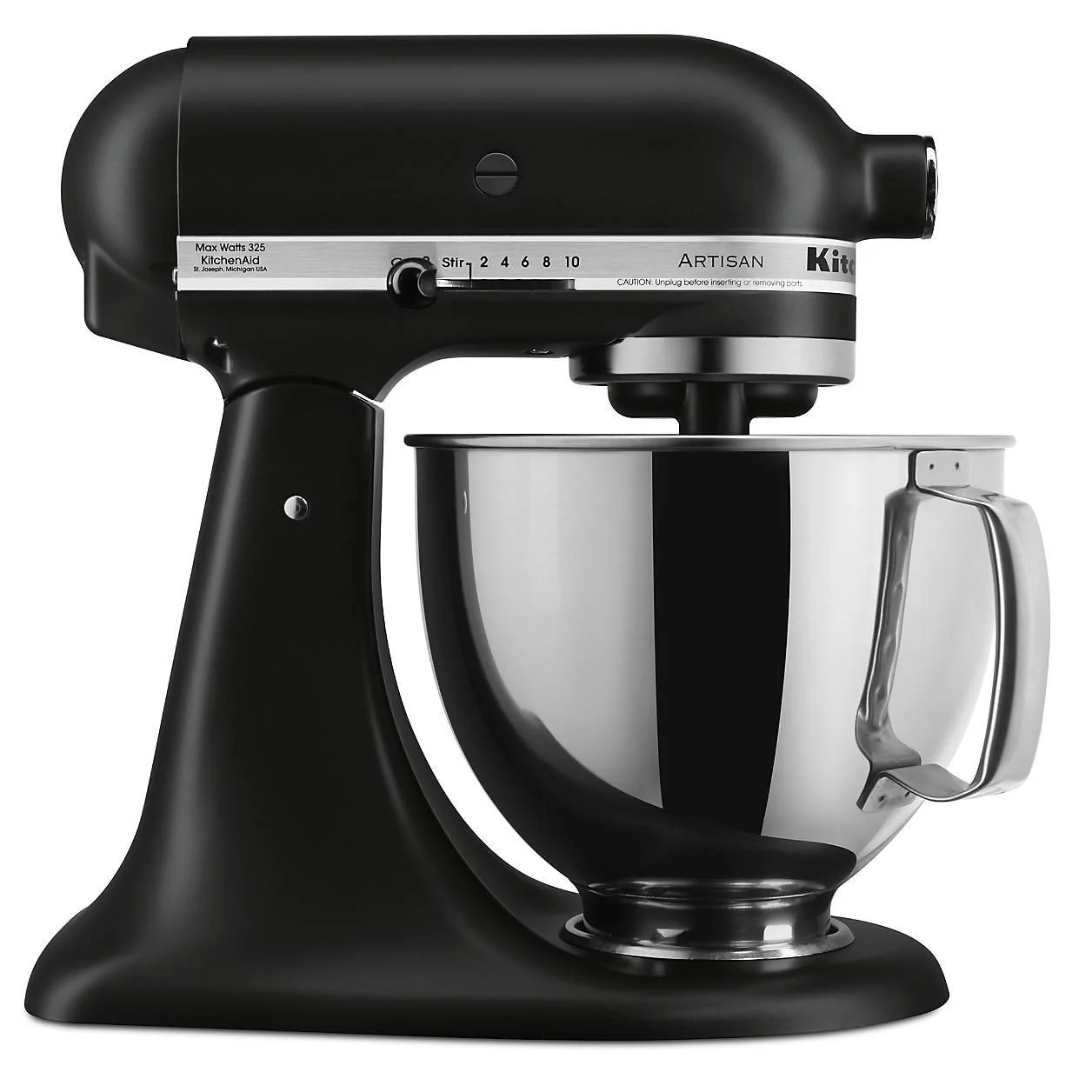
![Kitchen Aid Five Quart Stand Mixer in Matte Black Finish on Amazon]()
Stand Mixer
-
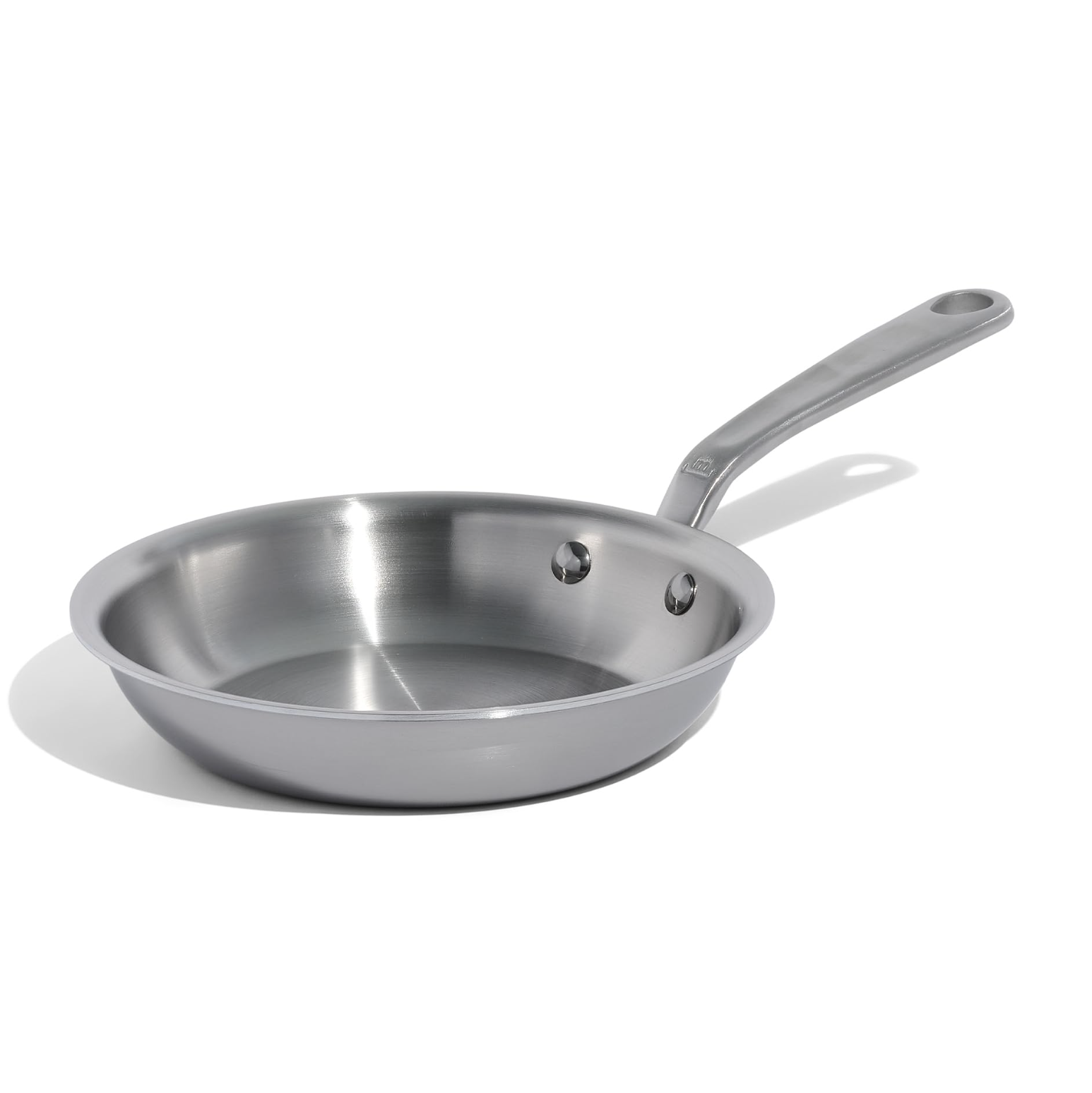
![Stainless Steel Skillet Stainless Steel Saute Pan Best Skillets Made In Skillet 8 inch stainless skillet best amazon cookware]()
Sauté Pan
-
![Oxo good grips everyday spatula on amazon best silicone spatula best rubber spatula for cooking]()
Spatula
-
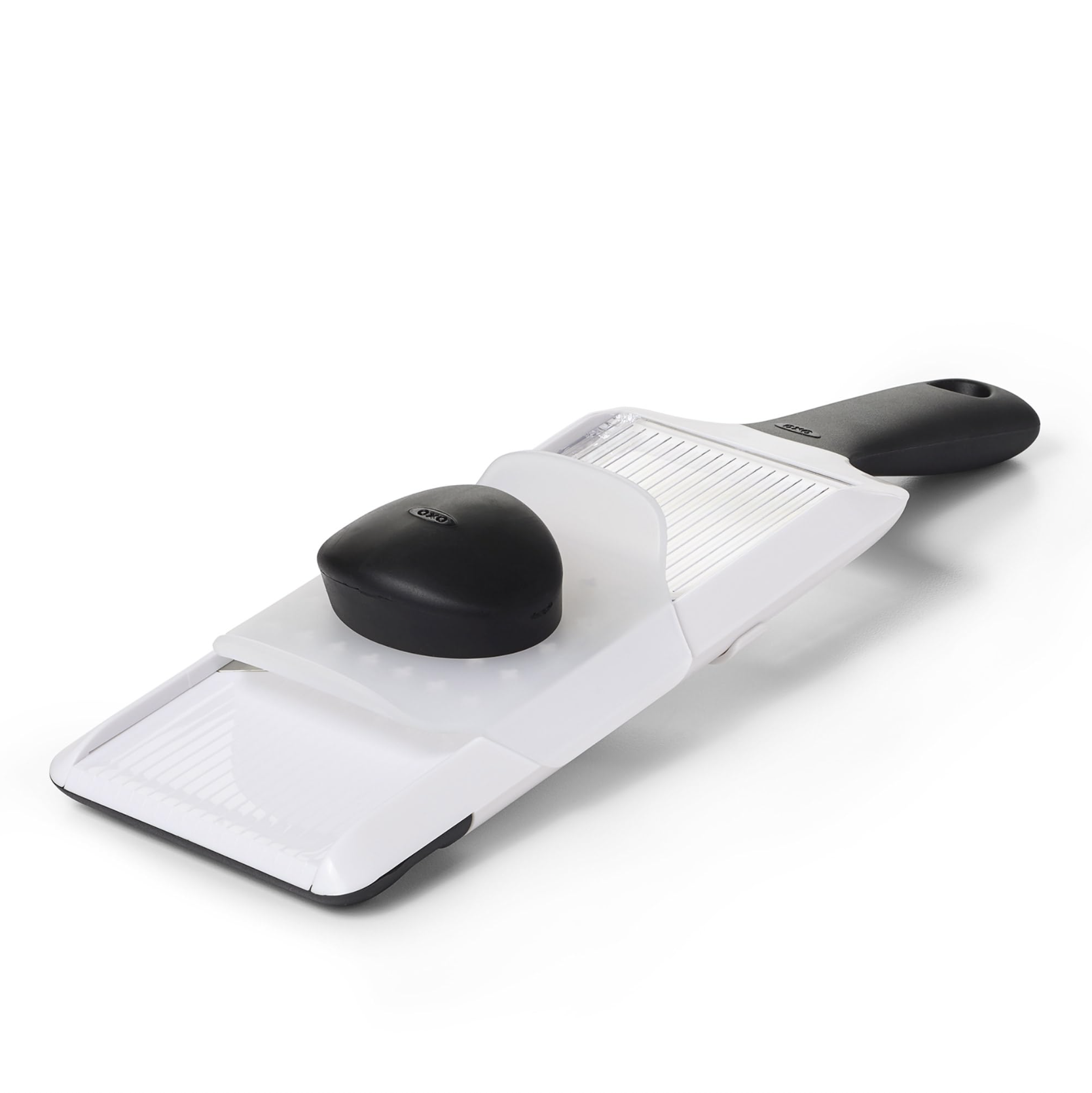
![mandoline slicer vegetable slicer best mandolines]()
Mandoline (optional)
-
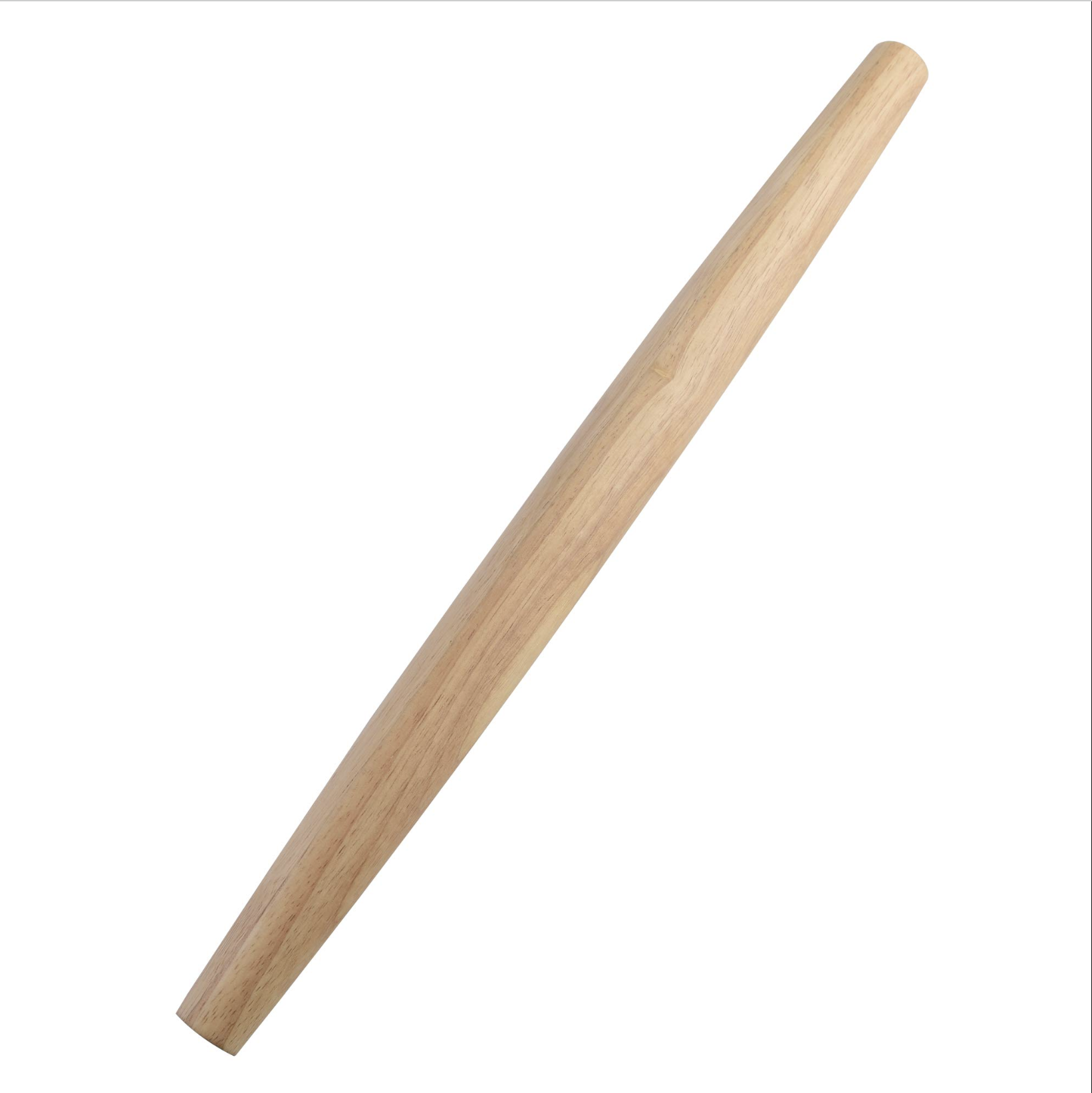
![Best rolling pin amazon best french rolling pins rolling pin for sale best rolling pin]()
Rolling Pin
-
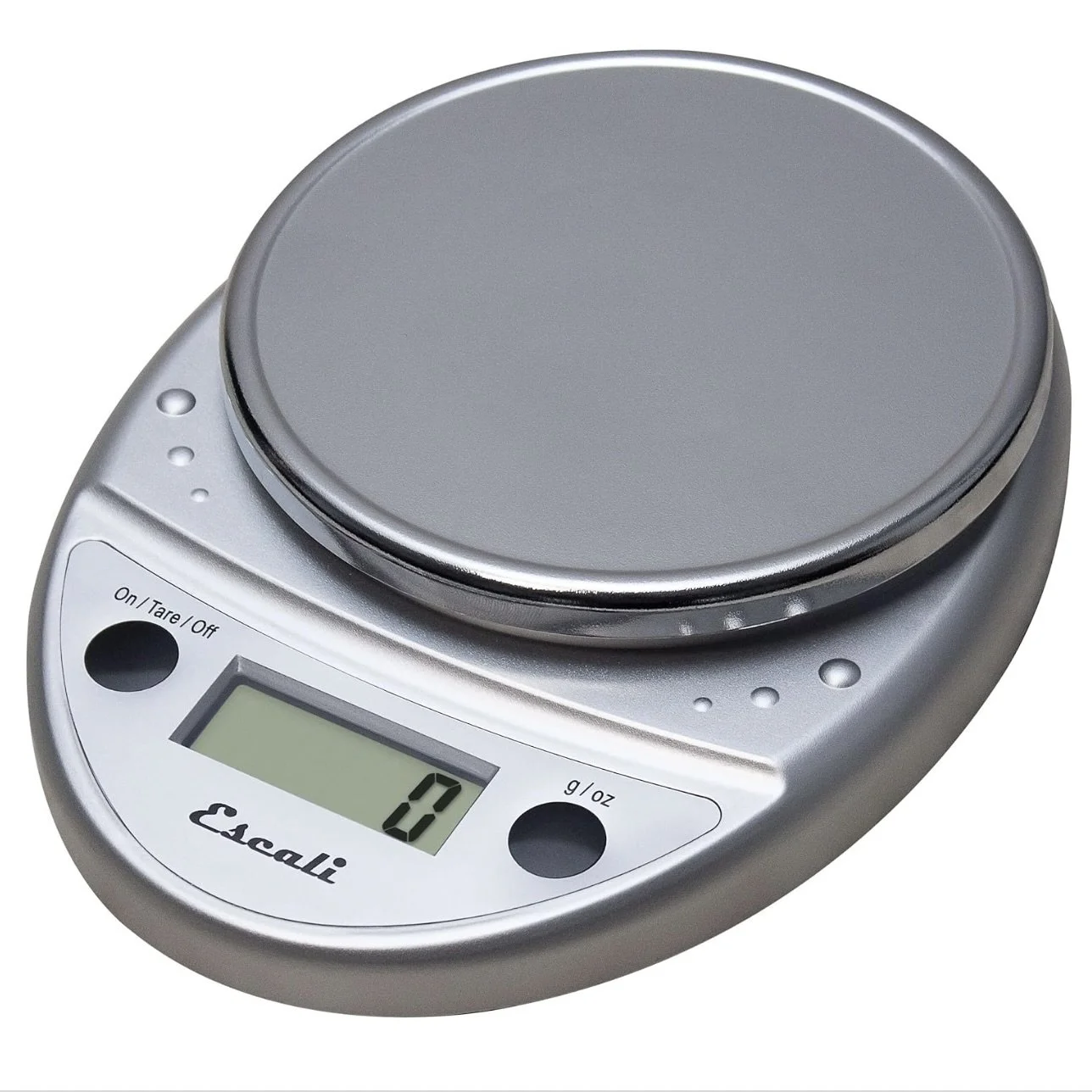
![Escali Digital Food Scale in Chrome Color on Amazon]()
Digital Kitchen Scale

INGREDIENTS
Tart Dough
9 tbsp unsalted butter, room temp (128 g)
⅓ cup powdered sugar (45 g)
1 tsp Diamond Crystal kosher salt (or ½ tsp Morton kosher salt)
3 large egg yolks
1 tbsp cold water
1 ½ cups + 2 tbsp all-purpose flour (225 g)
Leek & Potato Filling
1 tbsp olive oil
1 large leek (white + light green only), chopped
1 lb Yukon Gold potatoes, sliced very thin (1.5–2 mm) (450 g)
1 cup (8 oz) crème fraîche (225 g)
2 tsp Dijon mustard
¾ tsp Diamond Crystal kosher salt (or ½ tsp Morton kosher)
¼ tsp black pepper
Pinch freshly grated nutmeg
1 tsp finely chopped fresh thyme (or sub ½ tsp dried thyme)
Parmesan Potato Topping
2–3 small Yukon Gold potatoes, sliced very thin (1.5–2 mm)
2 tbsp melted butter
½ cup finely grated Parmesan
Fresh thyme for garnish
DIRECTIONS
Make the Tart Dough
In a stand mixer fitted with the paddle attachment, cream together the butter, powdered sugar, and salt just until smooth. Do not whip airy.
Note: If you don’t have a stand mixer, the dough can easily be made by hand instead. In a large bowl, mash the butter, powdered sugar, and salt together with a spatula or wooden spoon until smooth and creamy, then follow the recipe as written, mixing the remaining ingredients by hand.
Add the egg yolks and water and mix until fully incorporated and smooth.
Add the flour and mix on low just until the dough comes together in large crumbs.
Turn out onto a work surface and finish pressing together by hand into a smooth, cohesive dough. Press into a flat disc, wrap tightly in plastic wrap, and chill for 30–60 minutes.
Place between two large sheets of parchment paper (or two silicone baking mats) and roll to a very thin circle, about 2.5–3 mm thick. Rolling between parchment prevents sticking so you don’t need bench flour, which can dry out the dough and lead to cracking. If the dough is too firm to roll straight out of the fridge, let it sit for about 10–15 minutes at room temperature.
Peel off the parchment, carefully lifting the dough so it doesn’t tear, and transfer it to either a 9-inch or 10-inch tart pan or perforated tart ring. If using a ring, set it on a baking sheet lined with a silicone baking mat or parchment paper.
Press the dough into the pan, ensuring it’s even along the bottom and sides. Trim the excess dough, leaving a small overhang around the rim to help prevent shrinking during baking.
Dock the bottom all over with a fork, then freeze the crust for about 30 minutes.
Preheat oven to 350°F (175°C).
Line the frozen crust with parchment and fill with baking weights, dried beans, or rice all the way to the rim.
Bake on a sheet tray for 25 minutes with the weights, then carefully remove the weights and parchment.
Using a sharp knife, trim the excess dough from the rim so the edge is clean and even. Set aside to cool.
Make the Leek & Potato Filling
In a sauté pan, heat 1 tbsp of olive oil over medium-low heat.
Add the chopped leeks and a pinch of salt, then cook until soft and lightly golden, about 8–10 minutes. Set aside to cool.
In a large bowl toss together the sliced potatoes, crème fraîche, Dijon, salt, pepper, nutmeg, thyme, and sautéed leeks until the potatoes are evenly coated.
Pour the mixture into the partially baked tart crust, pressing to compact it tightly and evenly across the crust. You may not fit all the mixture, especially in a 9-inch crust. Do not fill past the top edge of the tart shell, as it may overflow while baking.
Top with Parmesan Potatoes & Bake
Preheat oven to 375°F (190°C).
Toss the thinly sliced potatoes in melted butter, then sprinkle Parmesan over them or press one side of each slice into the cheese to coat.
Layer the potatoes, Parmesan side up, on top of the tart, overlapping and arranging them in a concentric circle.
Bake the tart on a sheet tray for 50–60 minutes, until the top is golden and a knife slides easily through the center. If needed, broil for 1–2 minutes at the end for extra crispness and color.
Rest for about 20 minutes before slicing and finish with fresh thyme and flaky salt, if desired.
RECIPE NOTES & TIPS
Store the tart covered in the refrigerator for up to 3–4 days. For the best texture, rewarm in a 375°F (190°C) oven for 8–12 minutes to recrisp the potatoes and warm the filling.
The tart crust can be prepared up to 2 days in advance and stored wrapped in the refrigerator before rolling and baking.
If you don’t have a mandoline and are slicing the potatoes by hand, they will likely be a bit thicker. Keep that in mind while baking, as the tart may need an additional 5–10 minutes in the oven to cook through completely.
If you aren’t able to find crème fraîche, you can substitute an equal amount of full-fat sour cream or mascarpone.
Unlike pie dough, where visible pieces of butter create flakiness, tart dough is typically mixed until the butter is fully incorporated and the dough is smooth and cohesive. This creates a more stable crust that bakes up crisp with clean, well-defined edges.
To be precise and consistent when baking, I recommend using a Digital Food Scale. The one I linked is relatively inexpensive and in my opinion, a great investment for any home kitchen! But if you don’t have one, I’ll always include cup measurements as well.